

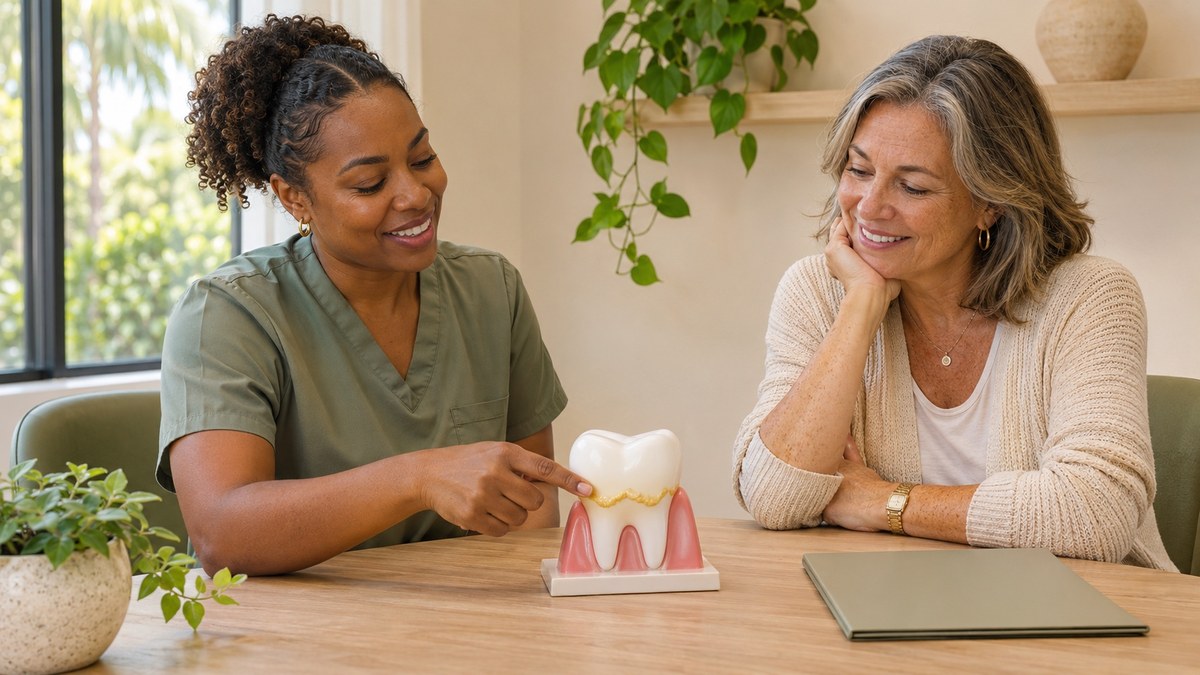
Tartar, also called dental calculus, is plaque that has hardened into a rough deposit on your teeth. Once it forms, brushing and flossing can’t remove it, and only a dental professional can clear it safely. Understanding what tartar is helps explain why regular cleanings matter even if you take good care of your teeth at home.
Tartar forms when the soft bacterial film known as plaque stays on your teeth long enough to absorb minerals from saliva. If you’re curious about the earlier stage, our guide to what plaque is and why it’s dangerous covers how it develops and how to disrupt it daily.
How Tartar Forms
Plaque starts re-forming within hours of cleaning. If it’s missed, minerals such as calcium and phosphate in saliva begin to harden it, sometimes within a day or two. Over time the deposit thickens and bonds to enamel, and the rough surface traps more plaque, so buildup speeds up.
Tartar shows up in two places:
- Supragingival tartar sits above the gumline and often looks yellow or tan. It’s common behind the lower front teeth and on the cheek-side of the upper molars, near the openings of the salivary glands.
- Subgingival tartar forms below the gumline, tends to be darker, and is more closely tied to gum disease.
Why Tartar Matters
It Irritates the Gums
Tartar’s rough surface holds bacteria against the gum tissue, which causes inflammation. Early on, you may notice puffy, red gums that bleed. Without treatment, the problem can progress to periodontitis, where the bone that supports your teeth is gradually lost. Healthy gums are part of a bigger picture, as we discuss in the mouth-body connection.
It Causes Stains and Bad Breath
Tartar absorbs pigments from coffee, tea, wine, and tobacco, so it can make teeth look dull or discolored. Bacteria in the deposit also contribute to persistent bad breath.
It Makes Home Care Harder
Because tartar is rough and attaches firmly, it becomes a base for new plaque. Even excellent brushing can’t get past it.
Why You Can’t Remove It Yourself
Metal scrapers sold online can scratch enamel, damage gums, and miss the deposits below the gumline. Tartar is bonded to the tooth, and trying to chip it off can cause injury. Professional removal uses ultrasonic instruments and hand scalers designed to clear deposits while protecting the tooth. You can read about the full visit in what happens during a cleaning and exam.
What Professional Removal Involves
- Examination. Your hygienist or dentist checks gum health, often measuring pocket depths.
- Scaling. Ultrasonic and hand instruments remove tartar above and below the gumline.
- Polishing. A gentle polish smooths the tooth surface and removes light stains.
- Home care coaching. You get tips on technique and tools suited to your mouth.
If you have significant buildup under the gums, your dentist may recommend a deeper cleaning called scaling and root planing, usually done in sections with numbing so you stay comfortable.
How to Slow Tartar Formation
- Brush twice daily with fluoride toothpaste, focusing on the gumline. See how to brush your teeth correctly.
- Clean between your teeth every day, since that’s where tartar loves to start. Here’s why flossing actually matters.
- Try a tartar control toothpaste, which can slow new deposits above the gumline.
- Quit tobacco, which speeds buildup.
- Keep your regular visits. Some people form tartar quickly, and a shorter interval between cleanings keeps it manageable. Our post on how often you should go to the dentist can help you decide.
Ready to Keep Tartar Under Control?
We’re getting ready to open our Oakland, FL practice, with gentle, thorough cleanings at the center of how we care for patients. Join our VIP list to be among the first to hear when we’re accepting appointments.