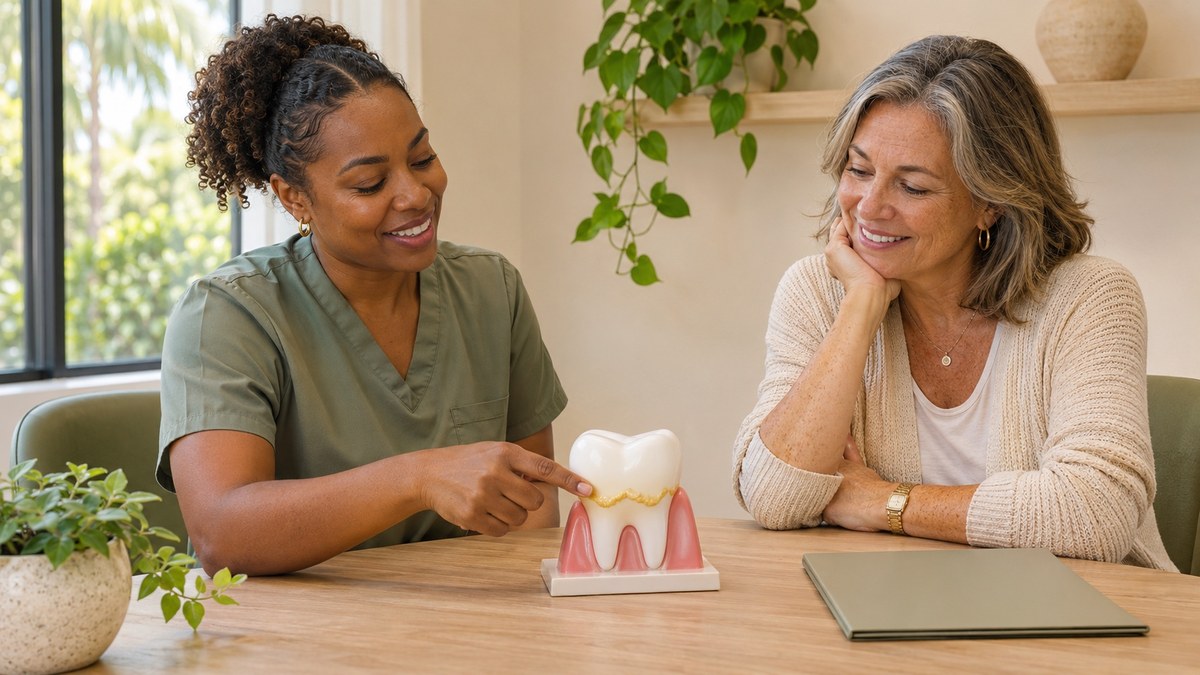


Yes, stress can damage your teeth, though usually not in an obvious way. Stress shows up in the mouth through grinding and clenching, dry mouth, gum inflammation, and slipping habits, and over months or years those effects add up to worn enamel, cracks, sensitivity, and cavities. Understanding how stress can damage teeth makes it easier to catch the early signs.
Most people think of stress as something that lives in the mind and the shoulders. The jaw is just as likely a place for it to land. Plenty of people with chipped teeth or a sore jaw are surprised to learn the cause was a demanding season at work or home.
How Stress Can Damage Teeth
Grinding and Clenching
Bruxism is the habit of grinding or clenching your teeth, and stress is one of its most common triggers. It can happen during the day when you’re focused or tense, or at night while you sleep, when you have no idea it’s happening. The forces involved can be far greater than normal chewing.
Over time, grinding can:
- Flatten and wear enamel, making teeth look shorter or more uneven.
- Chip or crack teeth, especially those with large fillings.
- Loosen or break dental work such as crowns and veneers.
- Cause sensitivity as protective enamel thins.
Our guide to teeth grinding explains the habit in more depth. Small fractures from clenching can also cause sharp, intermittent pain when you bite, a pattern covered in cracked tooth syndrome.
Jaw Pain and TMJ Problems
The same muscles that clench your teeth also move your jaw. When they’re overworked, you may notice soreness, tension headaches near the temples, or clicking and stiffness in the jaw joints. That’s often how stress-related temporomandibular joint disorder begins. We explore that connection in stress, jaw clenching, and TMJ.
Dry Mouth
Stress and anxiety can reduce saliva flow, and many medications used to treat anxiety, depression, and sleep problems list dry mouth as a side effect. Saliva is your mouth’s natural defense. It neutralizes acid, rinses away food, and supplies minerals that repair early weak spots in enamel. Without enough of it, cavities can develop faster. Learn more in the link between dry mouth and tooth decay.
Gum Inflammation
Plaque bacteria cause gum disease, but stress can change how your body responds. Research has linked chronic stress and elevated cortisol with a weaker immune response and more inflammation, which may make gums more vulnerable to bleeding and breakdown. People under long-term stress are also more likely to smoke, sleep poorly, and skip flossing, all of which make the problem worse.
Acid Reflux and Stress Eating
Stress can aggravate acid reflux, and stomach acid reaching the mouth erodes enamel. Read how acid reflux damages your teeth if you notice heartburn alongside sensitivity. Stress also tends to change what we reach for. Grazing on sweets, sipping sugary coffee drinks all afternoon, or snacking late at night gives cavity-causing bacteria a steady food supply.
Canker Sores
For people who are prone to them, stress is a common trigger for canker sores. These painful ulcers inside the cheeks or lips aren’t contagious and usually heal on their own, but they can make eating and brushing uncomfortable.
Warning Signs to Watch For
Stress damage to teeth often develops quietly. Watch for:
- Waking with a sore jaw, tired facial muscles, or a headache
- Teeth that look flatter, shorter, or chipped at the edges
- New sensitivity to cold or sweets
- Clicking, popping, or stiffness when you open your mouth
- Scalloped edges along the sides of your tongue, a sign of pressing it against your teeth
- Gums that bleed more than usual
- A partner mentioning grinding sounds at night
How to Protect Your Teeth From Stress
Notice and Interrupt Daytime Clenching
The resting position for your jaw is lips together, teeth apart, and tongue resting gently on the roof of your mouth. A sticky note on your monitor or a phone reminder can help you catch yourself clenching during the day.
Consider a Custom Night Guard
A night guard doesn’t stop grinding, but it absorbs the force so your teeth don’t. Custom guards made from impressions or digital scans fit precisely, stay in place, and tend to be more comfortable than store-bought versions. We compare the options in do night guards actually help with bruxism.
Protect Your Daily Routine
Busy, stressful weeks are when brushing and flossing slip. Keep the routine simple and consistent, using a good fluoride paste. If you’re not sure which one fits your needs, see how to choose the right toothpaste.
Support Saliva
Drink water throughout the day, chew sugar-free gum with xylitol, and limit alcohol and caffeine, both of which can dry the mouth. If a medication is causing dry mouth, talk with your prescriber before making any changes. Staying hydrated is one of the oral health habits most people skip.
Address the Stress Itself
Regular exercise, consistent sleep, breathing exercises, and time outdoors all help lower the background tension that drives clenching. If stress or anxiety feels overwhelming, talking with your physician or a counselor can make a real difference for your overall health, your teeth included. And if dental visits themselves add to your stress, you’re far from alone, as we discuss in dental anxiety is more common than you think.
Keep Regular Checkups
Dentists often spot the signs of grinding, enamel wear, and gum changes before you feel anything. Catching them early means simpler fixes, such as a guard or a small bonding repair, instead of crowns or root canals later.
When Stress Damage Needs Treatment
If stress has already left its mark, the good news is that most of the damage can be repaired, especially when it’s caught early. The right fix depends on what’s happened:
- Worn or chipped edges can often be rebuilt with tooth-colored dental bonding.
- Cracked teeth or broken fillings may need a new filling, an onlay, or a crown to hold the tooth together.
- Sensitivity from thinning enamel often improves with a desensitizing toothpaste, fluoride varnish, or bonding over exposed areas.
- Jaw pain and clicking usually respond to conservative care first, such as a guard, gentle stretches, heat, and short-term rest from hard or chewy foods.
- Gum inflammation improves with a professional cleaning and steady home care.
What matters most is protecting the repair afterward. A restoration placed in a mouth that’s still grinding heavily at night won’t last as long, which is why a guard and a plan for the underlying stress usually go hand in hand with any treatment.
Ready to Take the Pressure Off Your Smile?
If you’ve noticed jaw soreness, worn edges, or new sensitivity, it’s worth a closer look. We’re getting ready to open our Oakland, FL studio, where we’ll check for wear, discuss guard options, and help you build habits that protect your teeth. Join our VIP list to be the first to know when we’re scheduling.